
What to Do After a Fall: A Physiotherapist’s Guide for Older Adults

Cogent Rehab Blog
Folarin Babatunde PT, PhD
July 23, 2026
A fall can happen quickly. You may trip on a curb, lose your balance getting out of bed, slip in the bathroom, miss a step, or suddenly feel unsteady while walking. Sometimes there is an obvious injury. Other times, you may stand up, feel relatively fine, and assume nothing needs to be done. For older adults, however, a fall deserves attention even when there does not appear to be a serious injury.
According to the Public Health Agency of Canada’s most recent national data on falls among older adults, falls remain an important cause of injury, emergency-department visits and hospitalization among Canadians aged 65 and older.
But preventing the next fall can be just as important as recovering from the first one.
A fall may reveal changes in balance, strength, walking ability, vision, medication effects, dizziness, mobility, or confidence that were already developing before the fall occurred.
This guide explains what to do immediately after a fall, when medical attention may be necessary, what factors should be investigated afterward, and how physiotherapy in Burlington can help older adults rebuild strength, balance, mobility, and confidence.
First: Check Yourself Before Trying to Get Up
After a fall, the instinctive response is often to get back onto your feet as quickly as possible. That is not always the safest first step. Before attempting to stand, take a moment to determine whether you may have been injured.
Ask yourself:
Did I hit my head?
Did I lose consciousness?
Do I have severe pain?
Can I move my arms and legs normally?
Is there pain in my hip, pelvis, back, wrist, shoulder, or leg?
Am I dizzy or confused?
Is there bleeding?
Does one leg look shortened or positioned differently?
Do I feel unusually weak?
Can I safely put weight through my legs?
If you are unsure whether you can safely stand, obtain assistance rather than forcing yourself upright.

When Should You Seek Urgent Medical Attention After a Fall?
Some falls require immediate medical assessment. Call 911 or seek emergency medical care if the fall is associated with loss of consciousness, seizure activity, major bleeding, severe injury, new neurological symptoms, or inability to move safely.
You should also seek prompt medical assessment if you suspect:
a hip or other fracture
significant head injury
severe neck or back injury
sudden weakness affecting one side of the body
severe or unexplained dizziness
inability to bear weight
severe or increasing pain
If you an older adults taking anticoagulant or blood-thinning medication, you should be particularly cautious following a head impact and should follow the advice of your medical provider.
Physiotherapy should not replace appropriate emergency or medical assessment when a serious injury is suspected.
“I Fell, but I Feel Fine.” Do I Still Need to Do Anything?
Possibly.
One of the most important questions after a fall is not simply:
“Did the fall hurt me?”
It is also:
“Why did I fall?”
Falls are not always random accidents.
Sometimes there is an obvious environmental cause, such as ice or an object on the floor. Other falls may involve several contributing factors, including:
reduced leg strength
decreased balance
changes in walking
dizziness
reduced reaction speed
medication effects
vision problems
inappropriate footwear
difficulty using a mobility aid
decreased physical activity
environmental hazards
neurological conditions
recent illness or hospitalization
Parachute Canada’s falls-prevention guidance for older adults recommends addressing factors including balance and strength, vision and hearing, medications, footwear, nutrition, hydration and mobility-device use.
If you have fallen more than once—or have recently become more unsteady—a senior wellness and balance assessment at Cogent Rehab can help identify physical and functional factors that may be contributing to your fall risk.
The Hidden Consequence of Falling:
Fear of Falling Again
The physical injury is not always the biggest consequence of a fall. Some people become understandably nervous afterward.
You might start thinking:
“I don't trust my legs anymore.”
“I'm worried I'll fall if I go outside.”
“I'd better avoid the stairs.”
“Maybe I shouldn't walk unless someone is with me.”
That caution may initially seem sensible but gradually avoiding activity can lead to other problems.
Reduced physical activity and less activities such as walking may further contribute to reduced strength, endurance and mobility.
This can create a cycle:
Fall → fear of falling → reduced activity → loss of strength and confidence → greater difficulty with mobility
That is one reason rehabilitation after a fall should focus not only on the injury but also on restoring confidence and functional ability. Ontario's Exercise and Falls Prevention Programs specifically use exercise to support balance, strength and mobility among older adults.
What Does a Physiotherapist Assess After a Fall?
A physiotherapy assessment following a fall should try to understand the circumstances surrounding the fall and identify factors that may affect future mobility. At Cogent Physical Rehabilitation Center, assessment is individualized according to the person's health, mobility, functional limitations and goals.
1. Your Fall History
Your physiotherapist may ask:
Where did the fall occur?
What were you doing?
Did you trip or did your legs suddenly give way?
Were you dizzy?
Did you lose consciousness?
Were you using a cane or walker?
Have you fallen previously?
Have you had any near-falls?
Do you avoid certain activities because you are afraid of falling?
Near-falls can also be important. If you repeatedly need to grab furniture, walls or another person to prevent yourself from falling, your mobility may already be changing even though you have not reached the ground.
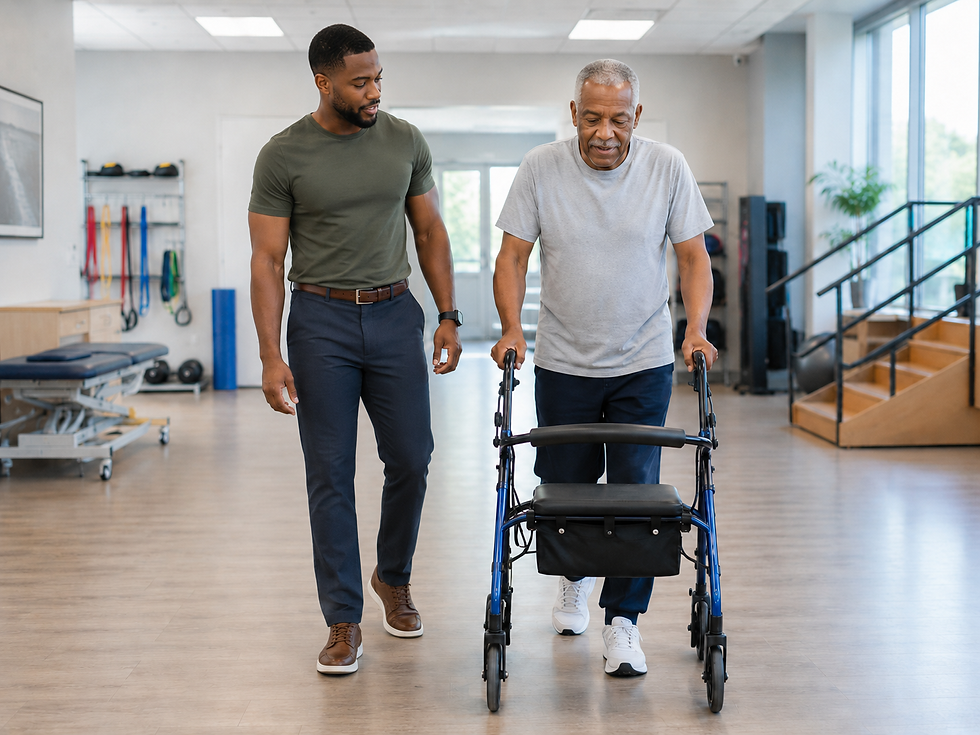
2. Walking and Gait
Walking provides useful information about mobility.
Your physiotherapist may observe:
walking speed
step length
foot clearance
turning
balance
use of a cane or walker
ability to start and stop
ability to walk while completing another task
tolerance for longer distances
Changes in walking can sometimes indicate strength, balance, neurological or musculoskeletal problems requiring further investigation. People whose balance or walking difficulties are related to stroke, Parkinson's disease, multiple sclerosis or other nervous-system conditions may benefit from neurological physiotherapy in Burlington.
3. Lower-Limb Strength
Strong legs are important for everyday tasks such as:
getting out of a chair
climbing stairs
recovering from a small loss of balance
stepping over obstacles
walking outdoors
A physiotherapist may assess hip, knee and ankle strength as well as functional movements such as repeated sit-to-stand.
4. Balance
Balance is not one single ability. You may be able to stand perfectly well with both feet on the floor but have difficulty:
turning quickly
stepping backward
standing with your feet closer together
stepping over an obstacle
recovering when bumped
walking while looking around
moving from a chair into standing
Therefore a good falls assessment should also reflect the activities you perform in everyday life rather than relying on one simple test. Cogent's Senior Care & Wellness Physiotherapy program includes physiotherapist-supervised balance, strength and mobility training designed to support independence and reduce falls risk.
5. Transfers and Functional Mobility
For some older adults, the biggest difficulty isn't walking long distances.
It may be one or more of the following:
getting out of bed
rising from a chair
getting on and off the toilet
transferring from wheelchair to bed
getting into a car
climbing stairs
standing long enough to prepare a meal
These activities should form part of a comprehensive falls assessment when they are relevant to your independence.
Common Fall-Risk Tests You May Encounter
Timed Up and Go Test
The individual stands from a chair, walks a short distance, turns, returns and sits down.
It provides information about overall functional mobility.
Five Times Sit-to-Stand
This assesses repeated rising from a chair and provides useful information about functional lower-extremity performance.
Berg Balance Scale
The Berg Balance Scale assesses a series of functional balance activities such as standing, turning, reaching and transferring.
Walking-Speed Tests
Walking speed may be measured over a standardized distance to monitor mobility and rehabilitation progress.
These tests are all clinically relevent but do not replace clinical judgment, and no single test provides a complete picture of someone's fall risk.
What Happens During Physiotherapy After a Fall?
Treatment should be based on what the assessment identifies. For one person, the main problem may be leg weakness. For another, it may be poor balance when turning. Someone else may have difficulty walking because of Parkinson's disease, stroke, multiple sclerosis, peripheral neuropathy or another neurological condition. Cogent provides dedicated neurological rehabilitation for people whose balance, walking or functional mobility is affected by a neurological condition. The rehabilitation plan should therefore be individualized.
Strength Training
Strength exercises after a fall should focus on improving the muscles needed for standing, walking, climbing stairs, and maintaining balance. Useful exercises include sit-to-stand, supported squats, heel raises, step-ups, hip abduction, knee extension, and supported marching.
The emphasis should be on functional strength—helping the person rise from a chair, walk more safely, manage stairs, and recover from small losses of balance.
Exercises should be matched to the person’s ability and progressed gradually by increasing repetitions, resistance, or reducing hand support.
Balance Training
Balance exercises may involve:
changing the base of support
reaching
stepping
turning
obstacle negotiation
changes in surface
controlled weight shifting
responding to movement challenges
The goal is not to perform risky exercises but to expose the individual to appropriately challenging activities in a safe and supervised environment.

Gait Training
Walking rehabilitation may involve:
Improving step length
Increasing foot clearance
Improving turning
Managing obstacles
Increasing walking endurance
Improving use of a cane or walker
Practising different environments
For people with neurological conditions, gait training may be incorporated into a broader neurological physiotherapy program.
Practising Real-Life Tasks
Strengthening alone is not enough if those improvements do not transfer into daily activities.
A rehabilitation program may therefore include practice of:
Getting out of a chair
Getting into bed
Climbing stairs
Stepping onto a curb
Getting into a car
Reaching
Carrying objects
Walking while changing direction
This is where functional rehabilitation becomes particularly important. The goal is not simply to become better at exercises. It is to become safer and more capable during everyday life.
Do I Need a Cane or Walker?
Sometimes, the answer is YES. However, the answer should not simply be:
“You're older, so you need a walker.”
A mobility device should ideally be selected according to the person's:
balance
strength
walking ability
environment
endurance
neurological status
upper-limb function
Any device selected should also be adjusted correctly. Parachute Canada's falls-prevention recommendations include considering a cane or other mobility device when needed and ensuring that older adults address multiple fall-risk factors rather than relying on one intervention alone. If you already use a cane or walker, bring it to your physiotherapy assessment so your physiotherapist can observe how you use it.
What About Falls Inside the Home?
Many fall risks can be reduced by making relatively simple environmental changes. The Public Health Agency of Canada recommends measures such as reducing tripping hazards, improving strength and balance, and using appropriate environmental supports to help prevent falls. (Preventing Falls and Injuries for Older Adults).
Consider the following:
keeping stairs and walking areas clear
improving lighting
installing appropriate handrails
using grab bars where needed
securing or removing loose rugs
keeping commonly used items within easy reach
wearing supportive, well-fitting footwear
promptly addressing wet or slippery surfaces
Health Canada's home fall-prevention guidance for seniors provides additional suggestions for bathrooms, stairs, bedrooms and other areas of the home.

Don't Forget Vision and Medications
Falls are often multifactorial. That means the physiotherapist may not be the only healthcare professional who should be involved.
Vision changes can contribute to falls, and medications may cause dizziness, drowsiness or other symptoms that affect mobility.
Parachute Canada recommends regular attention to vision and hearing as well as medication review with a pharmacist or physician as part of a broader falls-prevention strategy. (Falls in Seniors)
Depending on the situation, your healthcare team may include your:
family physician
pharmacist
optometrist
occupational therapist
physiotherapist
other medical specialists
What If Dizziness Is Contributing to My Falls?
Dizziness deserves specific assessment because not all balance problems arise from muscle weakness.
Some people experience:
spinning when rolling in bed
dizziness when turning their head
unsteadiness when walking
difficulty in busy visual environments
nausea with movement
These symptoms may warrant a vestibular assessment. Cogent provides concussion and vestibular-related assessment and rehabilitation, including vestibular and balance screening when appropriate.
Dizziness can also have medical, cardiovascular, medication-related or neurological causes, so unexplained or new dizziness should be appropriately investigated.
What If the Fall Happened After a Hospital Stay?
This deserves special attention. Older adults sometimes return home after hospitalization with significantly reduced:
strength
endurance
walking tolerance
transfer ability
confidence
Even someone who walked independently before hospitalization may temporarily need more support afterward. In these circumstances, physiotherapy may focus on gradually rebuilding functional abilities such as:
bed mobility → sitting → standing → transfers → walking → stairs → community mobility
Patients whose mobility decline is related to a neurological condition can learn more about Cogent's neurological physiotherapy services. For older adults transitioning from formal rehabilitation toward maintaining their gains, Cogent also offers Senior Care & Wellness Physiotherapy, including balance, strength, mobility and post-rehabilitation continuation programming.
A Fall Doesn't Automatically Mean You Are Losing Your Independence
One fall should not automatically be interpreted as evidence that an older adult can no longer live independently or participate safely in everyday activities.Instead, the fall can provide useful information.
It gives us an opportunity to ask:
What contributed to the fall?
Which factors can we change?
What does this person need to be able to do safely?
What abilities can we strengthen?
For some individuals, improvement may happen quickly. For others, especially those living with neurological conditions, prolonged hospitalization, significant deconditioning or multiple health conditions—progress may be slower. Slow progress can still be meaningful progress. For example, standing with less assistance, walking farther, transferring more safely, recovering balance more effectively, or becoming more confident using a walker can each represent important gains in independence.
Can Falls Be Prevented?
Not every fall can be prevented. However, many known fall-risk factors can be modified.
The Public Health Agency of Canada recommends improving balance and strength through exercise and addressing environmental hazards as important fall-prevention strategies. Fall prevention may involve several factors at the same time:
Move better
Improve strength, balance, mobility and walking ability.
Improve the environment
Reduce tripping and slipping hazards.
Use appropriate equipment
Make sure canes, walkers and other mobility aids are suitable and correctly used.
Review health factors
Discuss medications, dizziness, vision changes or unexplained falls with appropriate healthcare professionals.
Stay active
Avoid unnecessary long-term activity restriction following a fall once it is medically safe to resume movement.
When Should You Consider a Physiotherapy Assessment After a Fall?
Consider arranging an assessment if you notice any of the following:
More than one recent fall
Repeated near-falls
Increasing reliance on furniture while walking
Difficulty standing from a chair
Reduced walking speed
Difficulty managing stairs
New use of a cane or walker
Declining confidence outdoors
Difficulty turning
Loss of balance when reaching
Weakness following hospitalization
Dizziness with movement
Reduced mobility associated with a neurological condition
You don't necessarily have to wait for another fall before investigating why your mobility has changed.
If this sounds familiar, learn more about Cogent's Senior Care & Wellness Physiotherapy in Burlington.
Physiotherapy for Falls and Balance Problems in Burlington
At Cogent Physical Rehabilitation Center in Burlington, physiotherapy for older adults focuses on more than preventing someone from falling.
The broader goal is to help each individual achieve the highest practical level of mobility, safety and independence available to them.
Depending on your needs, rehabilitation may include:
balance assessment
gait assessment
strength testing
functional mobility testing
fall-risk assessment
transfer training
therapeutic exercise
gait training
neurological rehabilitation
mobility-device assessment
progressive functional strengthening
You can explore Cogent Rehab's physiotherapy services in Burlington to learn about available rehabilitation options. Treatment is individualized according to your health, mobility, home environment and personal goals.

Frequently Asked Questions
Should I see a physiotherapist after one fall?
Not everyone who falls needs physiotherapy. However, an assessment may be particularly useful when there has been a decline in strength, balance, walking or confidence, when falls are recurring, or when the reason for the fall is unclear.
Can physiotherapy prevent another fall?
No healthcare professional can guarantee that someone will never fall. Physiotherapy can identify and address potentially modifiable factors such as balance, strength, mobility, walking ability and mobility-device use.
What if I am afraid of falling?
Fear after a fall can influence activity and mobility. A graded rehabilitation program can progressively expose you to appropriate mobility tasks in a controlled setting while addressing strength, balance and confidence.
Should I use a walker after falling?
Not automatically. The most appropriate mobility aid depends on your balance, strength, walking ability, endurance, health condition and environment. A physiotherapist can assess whether a device is appropriate and how it should be used.
What if I become dizzy before I fall?
Unexplained dizziness warrants further assessment because dizziness has many possible causes. Vestibular problems are one possibility, but cardiovascular, medication-related, neurological and other medical factors may also need consideration.
Take the Next Step
A fall does not have to be the beginning of declining mobility. It can instead become the point where you identify what has changed and begin working systematically on the abilities needed to move more safely. If you or a family member has experienced a recent fall, repeated near-falls, declining balance or difficulty walking, a physiotherapy assessment can help determine which physical and functional factors should be addressed.
At Cogent Physical Rehabilitation Center in Burlington, we provide individualized physiotherapy for balance, falls, neurological conditions, mobility limitations and functional rehabilitation.
If you are new to Cogent, read What to Expect at Your First Physiotherapy Visit before your appointment.

Comments