

Workplace Wellness Physiotherapy
Physiotherapy-led workplace wellness, ergonomic assessment, injury prevention, movement education, and return-to-work support for businesses, employees, and teams.
Work-related discomfort, repetitive strain, prolonged sitting, prolonged standing, heavy lifting, poor workstation setup, fatigue, and stress can affect employee health, productivity, morale, and participation at work.
At Cogent Rehab, Workplace Wellness Physiotherapy helps employers and employees identify practical ways to reduce strain, prevent injury, improve comfort, and support safer, more sustainable work habits. Programs can be delivered at your workplace, at our Burlington clinic, or through a tailored hybrid approach.
What is Workplace Wellness Physiotherapy?
Workplace wellness physiotherapy uses physiotherapy assessment, education, ergonomics, movement strategies, and injury-prevention planning to support healthier work environments.
The goal is to help employees feel more comfortable, move better, manage physical demands, reduce preventable strain, and stay engaged at work. For employers, workplace wellness can support productivity, reduce injury risk, improve morale, and promote a healthier workplace culture.
Who This Service Is For
Workplace wellness physiotherapy may be suitable for:
-
Office workers with neck pain, back pain, shoulder tension, headaches, or wrist and hand discomfort
-
Employees who sit for long periods or use computers for most of the day
-
Workers who stand, lift, bend, reach, push, pull, or perform repetitive tasks
-
Healthcare, industrial, service, warehouse, retail, and administrative teams
-
Employees returning to work after injury, surgery, illness, or a period of reduced capacity
-
Employers wanting practical injury-prevention education for their team
-
Businesses looking for ergonomic assessment, movement-break programs, or workplace wellness sessions
Workplace Services May Include
Cogent Rehab can tailor workplace wellness services based on your setting, employee needs, and organizational goals.
Ergonomic Assessments
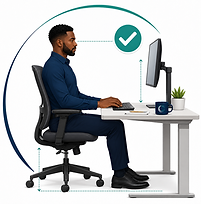
Assessment of workstations, desk setup, chair position, monitor height, keyboard and mouse placement, equipment use, posture, task setup, and movement habits. Recommendations may include practical adjustments to reduce strain and improve comfort.
Injury Prevention Workshops
Interactive education sessions focused on common work-related concerns such as neck pain, back pain, shoulder strain, wrist and hand discomfort, safe lifting, posture, movement breaks, and early symptom management.
Movement Break Programs
Simple, practical movement strategies employees can use during the workday to reduce stiffness, improve circulation, support posture, and increase energy without disrupting workflow.
Return-to-Work Support
Guidance for employees returning after injury, surgery, illness, or reduced work capacity. Support may include activity pacing, graded exposure, functional strengthening, workstation modification, and communication around safe progression.
Workplace Mobility and Strength Education
Practical coaching for employees whose roles involve lifting, carrying, reaching, bending, pushing, pulling, prolonged standing, or repetitive physical tasks.
Customized Workplace Wellness Programs
Programs can be adapted for office teams, healthcare workers, industrial employees, warehouse staff, service workers, and small businesses.
Benefits of Workplace Wellness
For employees, workplace wellness physiotherapy may help reduce work-related discomfort, improve posture and movement habits, support energy and confidence, and provide practical strategies for managing early symptoms before they become more limiting.
For employers, it can support injury prevention, safer work habits, improved staff comfort, return-to-work planning, and a healthier workplace culture.
For Employers
Practical injury-prevention education
Support for safer return-to-work planning
Reduced strain from repetitive or physical tasks
Better employee confidence and participation
For Employees
Less work-related pain
Better posture and movement habits
Improved comfort during workday
Early symptom-management strategies
What to Expect
Workplace wellness physiotherapy begins with a discussion about your team’s needs, work demands, common discomfort areas, and goals. Depending on your workplace, this may include employee feedback, workstation review, job-task discussion, or a workplace needs assessment.
From there, Cogent Rehab can recommend a practical plan, which may include ergonomic assessments, injury-prevention education, movement-break strategies, return-to-work support, or customized workplace wellness sessions.
Services may be provided onsite at your workplace, in-clinic at Cogent Rehab in Burlington, or through a hybrid approach depending on your needs, location, and scheduling.
FAQs About Workplace Wellness & Physiotherapy
Do you work with small and large companies?
Yes. Workplace wellness programs can be adapted for small businesses, office teams, healthcare settings, service workers, industrial teams, and larger organizations.
Can employees benefit even if they do not have pain?
Yes. Workplace wellness is not only for people with injuries. Education, ergonomic strategies, and movement habits can help employees reduce strain, stay active, and manage early symptoms before they become more limiting.
Do you provide onsite workplace visits?
Yes. Depending on scheduling and location, services may be provided onsite at your workplace, at Cogent Rehab in Burlington, or through a hybrid approach.
Are workplace wellness services covered by insurance?
Some individual physiotherapy services may be eligible under extended health benefits, depending on the employee’s plan. Employer-sponsored workplace wellness services are usually arranged directly with the business or organization.
What industries do you support?
Programs can be adapted for office workers, healthcare teams, industrial employees, warehouse staff, retail and service workers, and other workplace settings with specific physical demands.
What does an ergonomic assessment include?
An ergonomic assessment may include review of workstation setup, chair and desk positioning, monitor height, keyboard and mouse placement, posture, work habits, equipment use, and practical recommendations to reduce strain.